

Beyond the bottle: discover majestic mountains and unparalleled natural beauty
Cape Winelands
Some 60km east of Cape Town, the flat land transforms into a mountainous landscape with beautiful valleys. Although South Africa has a lot of wine producing regions, the area around Franschhoek, Stellenbosch and Paarl is often referred to as the Cape Winelands. The valleys, with its fertile soil, are covered with vineyards and Cape Dutch-style buildings. The mountains are the actual gem in this region.

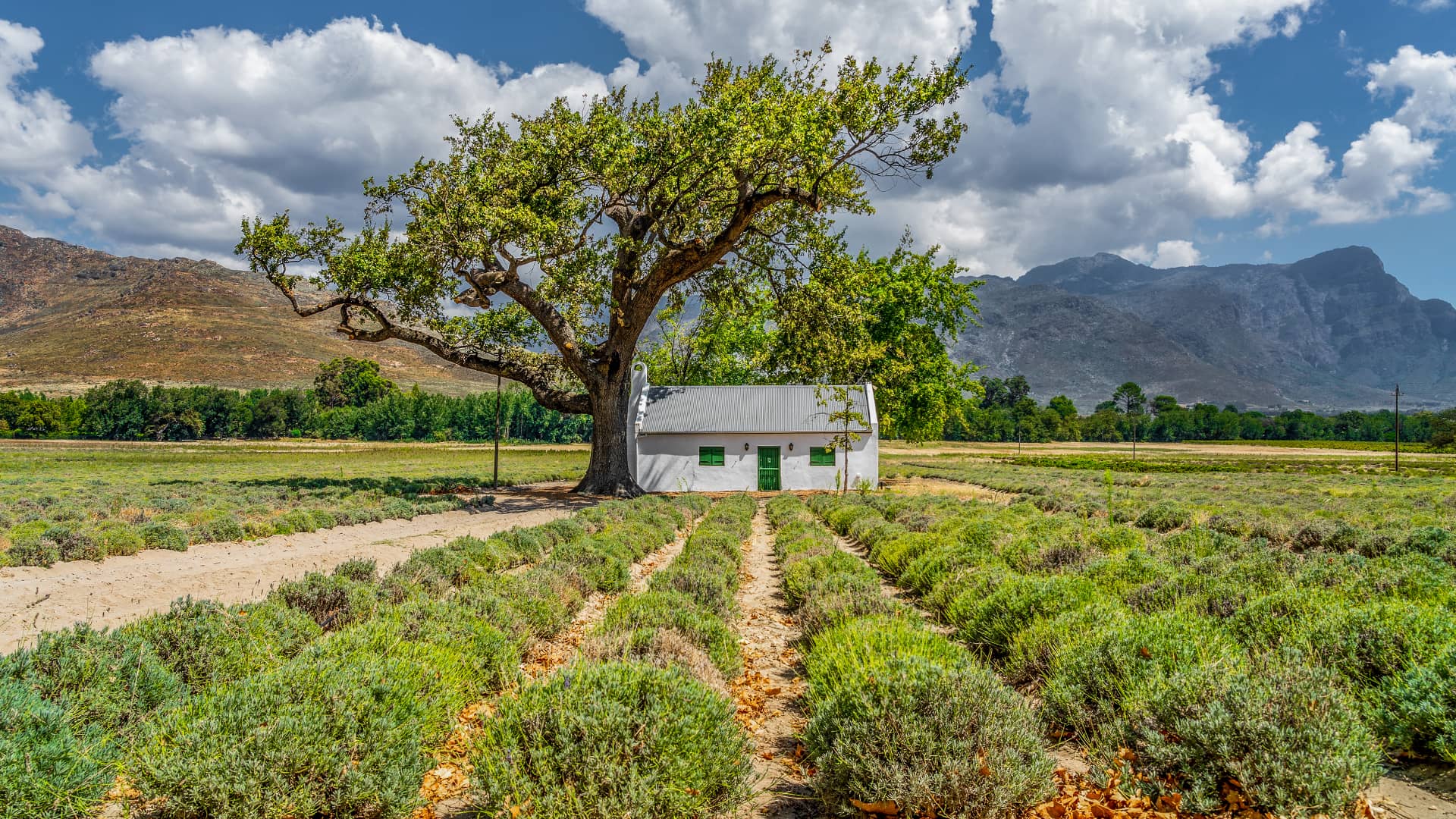
There are some excellent nature reserves in this area, mainly due to the fact that a large portion of this region is mountainous and therefore not suited for human development (cities or agriculture). This truly is the land of mountain peaks and valleys with massive cliffs of several hundred meters high. In the rainy season the waterfalls grow larger and in winter time the mountain peaks can get covered in snow.
This region is truly a hikers paradise. There are many trails alongside rivers, past rock pools and waterfalls, through kloofs and valleys and up to mountain peaks. These peaks offer breathtaking 360-degree views of the surrounding mountains and valleys. Especially the Du Toits Peak, reaching almost 2000m in height. The entire region is ideal for hiking, abseiling and mountain biking. But you could also just enjoy the scenic mountain vistas from below.
Another major attraction here is its plant life. Being part of the Cape Floral Kingdom, the floral diversity is very high. Over 3500 plant species have been observed here by tourists, but the actual number should be much higher.


WHERE
IS THIS REGION
LOCATED
PARKS & RESERVES

Helderberg Nature Reserve
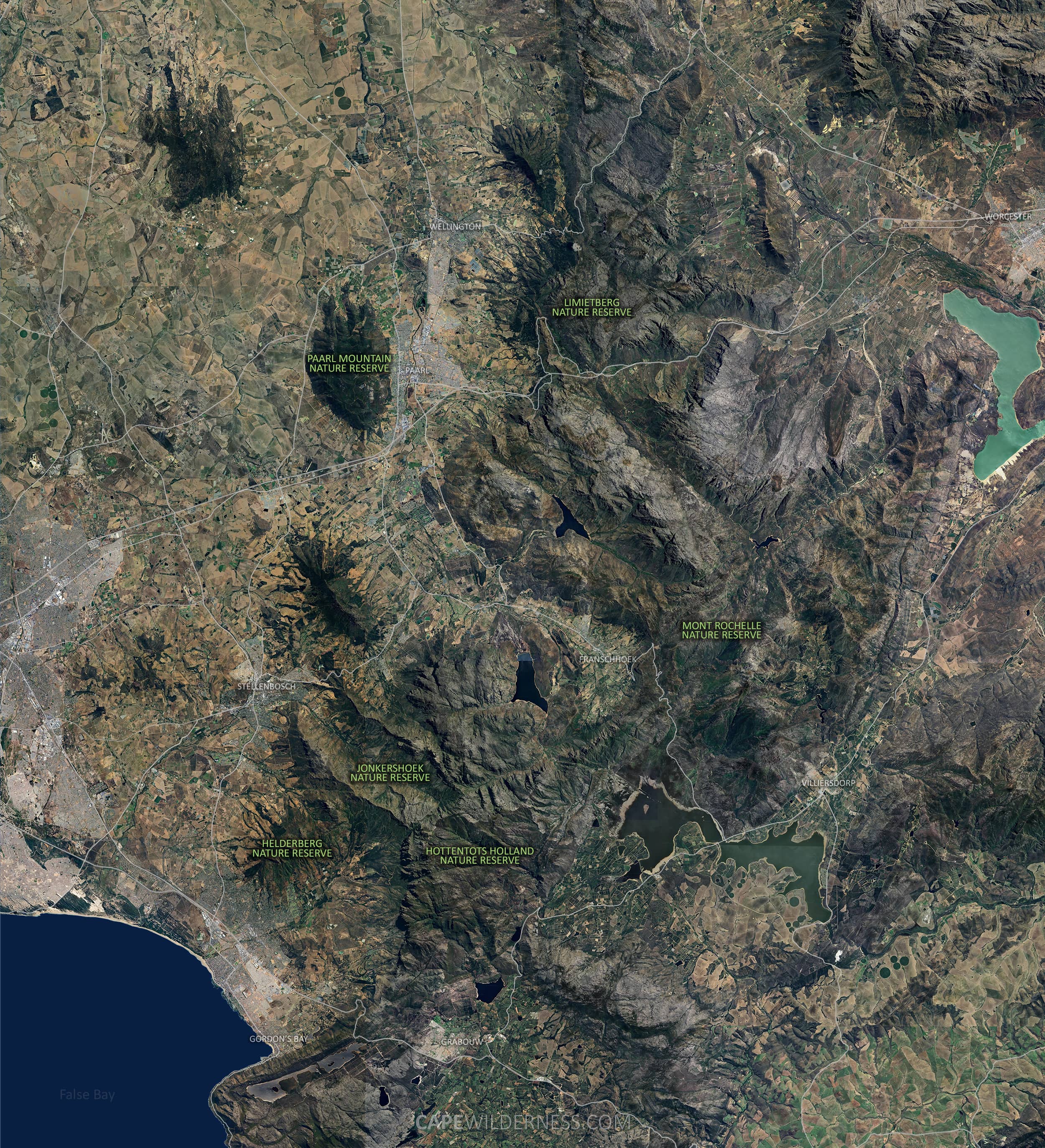
The Helderberg Nature Reserve is located just outside Somerset West and includes the Helderberg Mountain. There are various hiking trails snaking through this reserve and provide beautiful vistas. The highest peak (1137 m) offers a 360-degree view of Cape Town, the Cape Flats, False Bay and the mountains of the Cape Winelands. The vegetation here is mostly Fynbos, which attracts about 170 bird species to the reserve. It’s a perfect destination for an active city-getaway.

Jonkershoek Nature Reserve
The Jonkershoek Nature Reserve lies near Stellenbosch and incorporates the Assegaaibosch Nature Reserve. The reserve is home to the Jonkershoek Mountains and part of the Jonkershoek Valley, providing beautiful green valleys, waterfalls and rockpools. Over 1100 plant species are found here and a number of small mammals, birds and reptiles. With various short walks and 4 hiking trails (between 5-18km), the reserve offers great exploration.
Mont Rochelle Nature Reserve
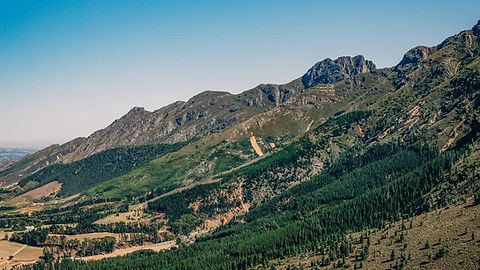
The Mont Rochelle Nature Reserve is located to the east of Franschhoek and lies in the Franschhoek Mountains. There are 10 hiking trails that will pass through the lush greenery, fields of wildflowers and alongside pale brown mountain streams of this reserve, ranging from 2 to 13 km in length. The higher you climb, the more breathtaking the views become, offering beautiful panoramic views of the surrounding mountains and valleys.

Hottentots Holland Nature Reserve
The Hottentots Holland Nature Reserve is a massive 70.000ha reserve and located between Stellenbosch, Franschoek and Grabouw. It is a mountainous reserve with altitudes between 500m and 1590m. With day and multi-day hikes, a mountain bike trail, kloofing trails and a canopy tour, there are plenty of options to experience this scenic beauty. In addition, with over 1300 recorded plant species, 110 bird species, as well as the Leopard, Caracal, Cape Greysbok and Bush Duiker, there is abundant natural beauty to discover.

Limietberg Nature Reserve
The Limietberg Nature Reserve lies to the east of Paarl in the Du Toitskloof Mountains. Some of the highest peaks of the region can be found here with the Du Toit Peak being the highest at 1996m. In winter the highest peaks get covered in snow. There are several walks and hikes through the Fynbos-covered slopes, steep kloofs and deep valleys. It is recommended to be, or go with an experienced hiker when visiting Limietberg.

Paarl Mountain Nature Reserve
The Paarl Mountain Nature Reserve lies to the west of Paarl and is named after the 3 massive granite rock formations. They date back over 500 million years and are the second largest granite rocks in the world. These granite rocks shine like pearls when they are washed by the rain. This Fynbos-covered reserve is home to Wild Olives, Rock Candlewoods and Wagon Trees. The network of paths and some stunning 360-degree views make this reserve a relaxing getaway.

FLORA & FAUNA
The Cape Winelands is quite a mountainous region. The valleys and slopes are often inhabited by humans and used for vineyards, but a large part of this region is mountainous terrain. Land that can only be used for nature, and that is just what they have done. These mountains are an ideal habitat for specialist such as Klipspringer or hunters such as the Leopard. You don’t have to worry about the Leopard, you might find tracks or droppings, but seeing one in the flesh hardly ever happens.

Living in mountainous terrain is not something that every mammal can do, especially the larger mammals you traditionally find on the plains. But there are some medium-sized mammals occurring in this region, such as the Caracal, Ratel (Honey Badger), Grey Rhebuck, Bush Duiker, Cape Grysbok and Zorilla (Striped Polecat). The Hottentots Holland Nature Reserve have reintroduced some of the larger mammals like the Mountain Zebra, Common Eland, Bontebok and Hartebeest.
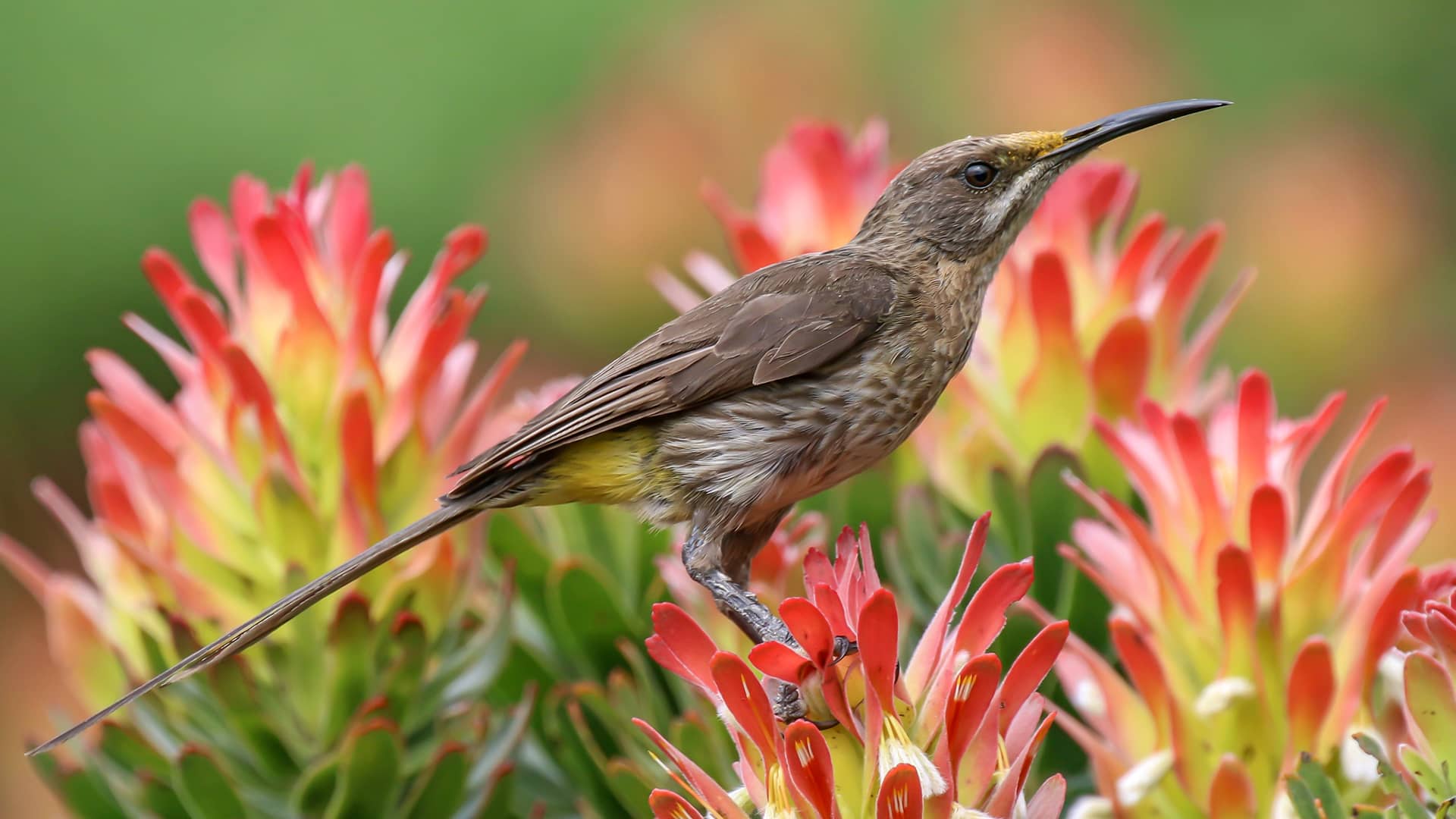
Typical birds of the Cape Winelands are the Hamerkop, several sunbirds, kingfishers, Cape Sugarbird, Protea Canary and the Cape Eagle-Owl. The larger birds of prey are the Verreaux’s Eagle, African Fish Eagle, Booted Eagle and Spotted Eagle-Owl.
Hikers should be alert on snakes they can encounter in these mountains. Some of the fairly common snakes here are the Berg Adder, Puff Adder, Boomslang and Cape Cobra.
Being part of the Cape Floral Kingdom, there is quit floral beauty to behold. The vegetation here consists of a diverse array of Protea, Erica, geophyte and Daisy species, as well as some endemic species. In the moister areas, the Ericas predominate over the other plant species.