Come for the wildlife, stay for the flora: South Africa's best-kept secret is its incredible plant life.
Flora
South Africa is one of the most biodiverse countries in the world and probably best known for safari and the mega fauna you can find there. But thanks to the many different landscapes and microclimates, it also boasts a world of flora. With over 22.000 recorded vascular plant species, it is the proud home of 10% of all the plant species in the world.

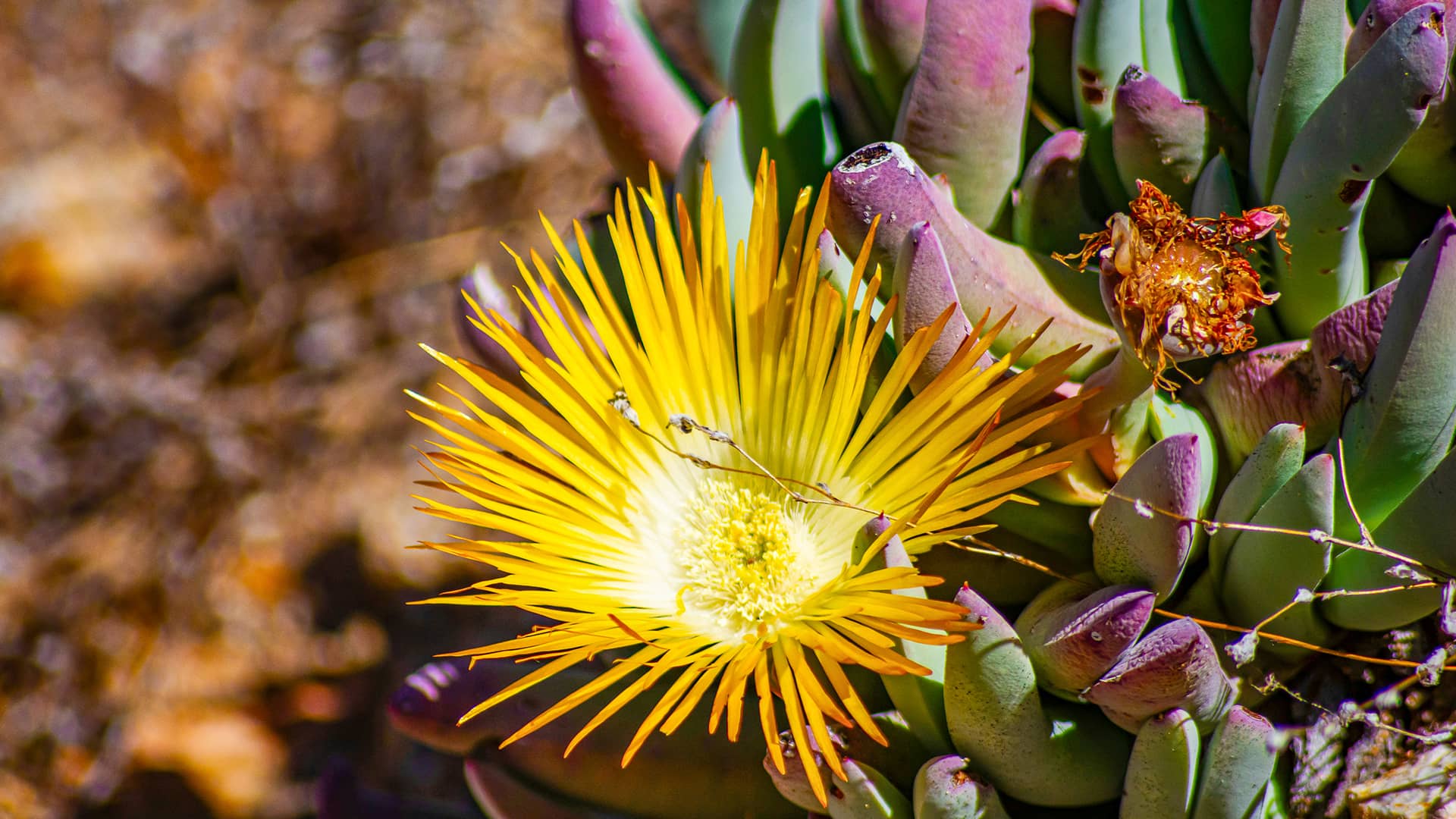
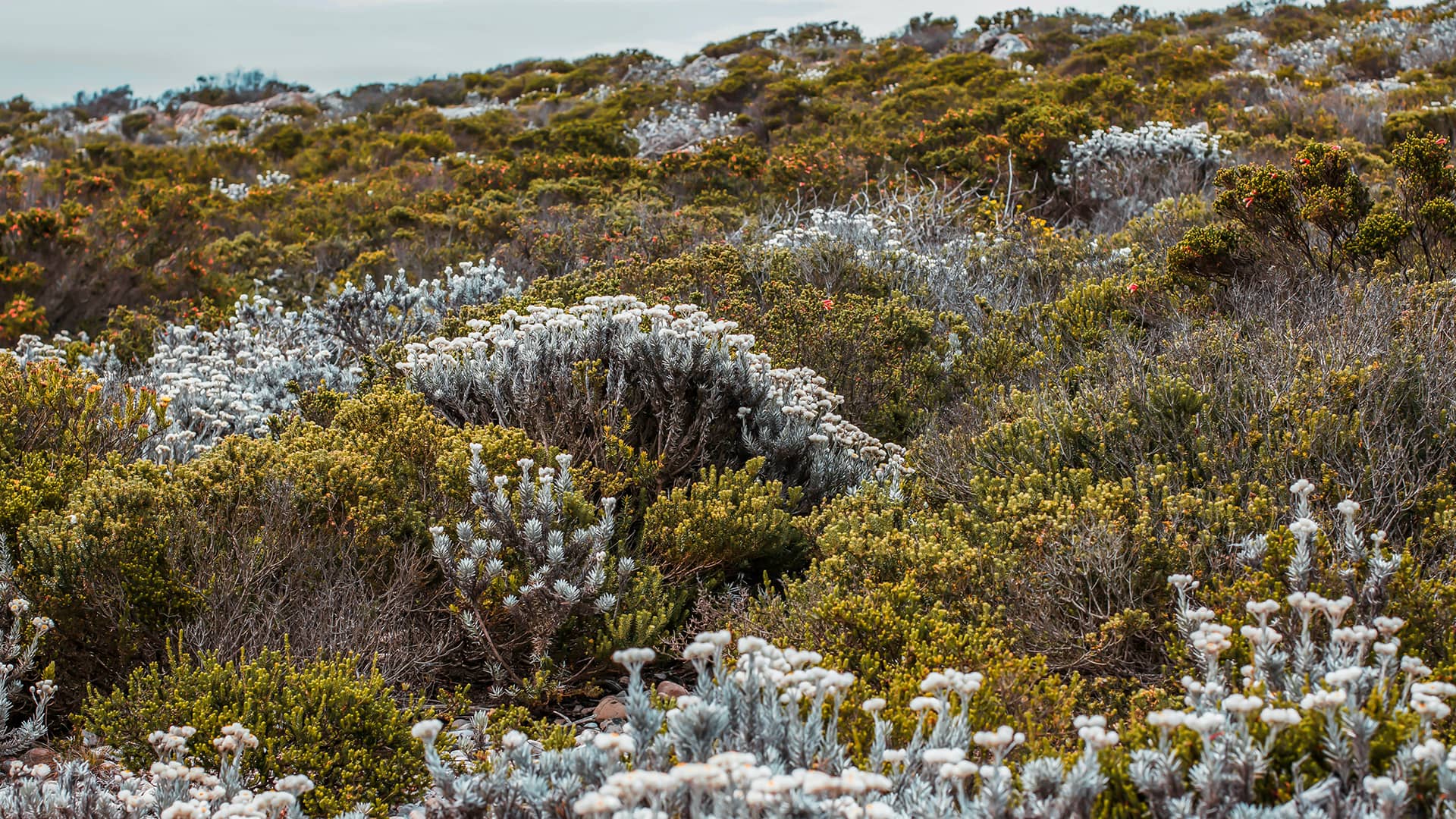
There are two major contributors to this wealth in flora, the Fynbos biome and Succulent Karoo biome. Together the make up two thirds of this diversity. Other notable biomes are Grassland, Forest and Savanna. The Fynbos biome houses by far the greatest diversity of plant species, around 8000 plant species. This biome is characterized by low-growing shrubs, heathlands and proteas, creating a beautiful carpet of colors and textures. The Succulent Karoo biome is, after the Fynbos biome, the second most diverse biome in South Africa. Over 6000 plant species make up this biome and 40% of them are endemic to this biome. It also has the richest succulent flora in the world. About one-third of all succulent plant in the world can be found here.

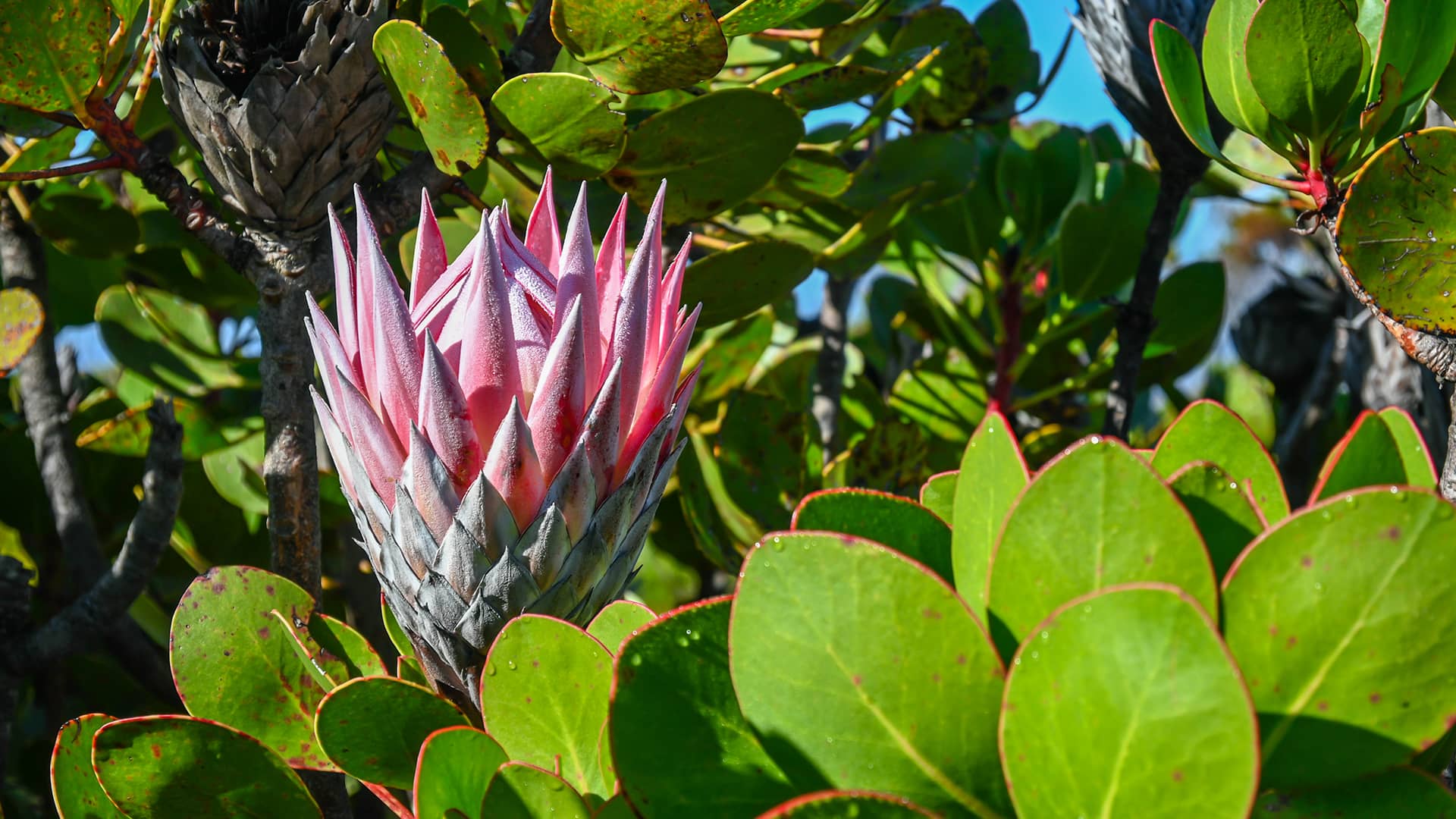
Within this plethora of the South African flora, there are species (of groups) that stand out in beauty or status. For example the Proteas. They display a huge range of shapes, colors and sizes and are drought-tolerant. These flowers are synonymous with the strength and beauty of South Africa and it is no surprise that the King Protea (Protea cynaroides) is their national flower. Another notable group are the Ericas, they are often found in forest or fynbos regions. Forming shrubs with needle-like leaves and an array of colors.

For the most of us, our vacations don’t have unlimited time or money so that we get to see and do everything that we want, and the floral side is left out. The entire floral spectrum of South Africa might be a bit much to integrate on your vacation, but the Fynbos and Succulent Karoo biomes are worth seeing. The Western Cape province, in particular the Cape Peninsula, Cape Winelands, Overberg and Little Karoo regions, is a prime destination to experience these two biomes.
WHAT TO SEE

Dicots
In the Western Cape, dicots dominate the Fynbos, one of the world’s most diverse plant regions. Here you’ll find proteas, ericas, and restios covering mountain slopes and coastal lowlands. Many of these species bloom seasonally, painting the landscape with color and attracting nectar-feeding birds and insects. Spring is especially rewarding, when hillsides and valleys fill with flowering shrubs and wildflowers.
Further inland, dicot species define the character of arid regions such as the Karoo. Low-growing shrubs and succulents have adapted to limited rainfall, storing moisture and surviving long dry spells. After rain, these areas can briefly transform as dormant seeds germinate and produce carpets of flowers across otherwise muted terrain.
Savanna regions also feature a wide range of dicot trees and shrubs. Acacias are among the most recognizable, with their flat-topped canopies providing shade across open plains. These woody dicots support browsing animals, nesting birds, and countless insects, forming a backbone of the ecosystem.
Along river valleys and forest margins, larger dicot trees create denser vegetation, contributing to layered habitats that support diverse wildlife. Seasonal leaf growth and flowering cycles influence the availability of food and shelter throughout the year.

Monocots
In the grasslands and savannas, grasses dominate vast areas, creating the sweeping horizons that characterize the Highveld and Bushveld. These grass species are the foundation of grazing ecosystems, supporting antelope, zebra, and other herbivores. Seasonal rainfall transforms these regions, with fresh green growth appearing quickly after summer storms.
Wetlands, rivers, and estuaries are also strongly shaped by monocots. Reeds and sedges line watercourses, stabilizing soil and providing shelter for birds, amphibians, and aquatic life. In these quieter habitats, dense stands of vegetation create important breeding and feeding grounds.
South Africa’s mountainous and Fynbos regions host an impressive variety of flowering monocots. Irises, watsonias, and other bulbous plants produce vivid seasonal displays, often emerging after winter rains or fire. Orchids, though sometimes small and easily overlooked, add to the botanical richness of forest edges and grassland slopes.
Succulent monocots, especially aloes, are among the most visually striking. Many species grow in rocky or arid environments, sending up tall flower spikes that attract birds and insects. Their sculptural forms are a familiar sight in both wild landscapes and rural settings.

